субота, 1. април 2023.

HAXAN (1922): STO GODINA KASNIJE


Prošle godine bila je stogodišnjica od premijere jednog od najvažnijih i najuticajnijih hororičnih klasika nemog filma, švedske VEŠTICE (Haxan). Pisao sam o tom delu opširno u mojoj studiji o Đavolu na filmu FAUSTOVSKI EKRAN (2006), a pisao sam, ponovo (ali sasvim drugo, drugim rečima, iz drugog ugla), prošle godine, i za najbolji svetski horor magazin, RUE MORGUE.

            Malo niže, ekskluzivno na ovom blogu, sada možete pročitati taj tekst, ako ga niste u MRTVAČKOJ ULICI.

            Inače, ovaj moj tekst nominovan je nedavno za uglednu nagradu, Rondo Hatton Classic Horror Award, u kategoriji NAJBOLJI ČLANAK (BEST ARTICLE).

            Dakle, pročitajte ga, pa ako vam se svidi, a i ako ne, GLASAJTE ZA MENE – jer ovo je nagrada koju dodeljuje NAROD!

            Vrlo je jednostavna procedura – objasniću je sasvim ispod, posle članka.

            Ali prvo, evo tog članka, originalno pisanog za RUE MORGUE #205.


Benjamin Christensen’s Hӓxan, the film which cast its spell a hundred years ago, still works its dark magic


HEX OF THE CENTURY


Dejan Ognjanović


A century ago the art of cinema was still young, but becoming ever more conscious of its possibilities. Visionary artists had a fresh, powerful tool at their disposal to paint with, and they used moving images and flickering interplays between the light and the dark to portray new, unseen worlds. Some of Europe’s greatest filmmakers of the time, though unrelated to one another, and without a conscious intention to do so, actually brought the nascent horror cinema to adulthood by defining the basics of its language. It was achieved through four masterpieces which premiered within two years from one another. Three of them were German. The Cabinet of Dr. Caligari (1920) exemplified the ability of cinema to depict the distorted, irrational world of nightmares. Golem (1920) embodied the possibilities of expressionistic painting with darkness and shadows which served as a visual (but also thematic) template for later Universal’s horrors, starting with Frankenstein (1931). Then came Nosferatu (Nosferatu, eine Symphonie des Grauens, 1922) which spread the stylized studio-shot horrors into the real-world’s exteriors of forests, castles, mountains and seas. Finally, 1922 also brought a film as accomplished and important, yet in many ways apart from the above – Hӓxan, also known as Witchcraft Through the Ages.  

 It was the third and by far the most ambitious film by the Danish director Benjamin Christensen: so ambitious that it took him more than two years for research and preparation, so demanding that it required a new, special, state-of-the-arts studio, so controversial in subject and approach that he could find no backers in Denmark for it, so he ended up making it with Swedish producers: as a result, its title remains embedded in history as the Swedish Hӓxan, instead of Danish Heksen…


By any name it is a powerful piece of cinema with a lasting legacy. Its rerelease in 1941 was accompanied by William Sieverts’s book Witchcraft and Superstition Through the Times. In 1968 it was reedited by Antony Balch into a version featuring jazz score and narration by the cult author William S. Burroughs. In 1999 the makers of The Blair Witch Project named their production company after it – Haxan Films. The Norwegian black metal band Mayhem used a frame from Hӓxan depicting Devil for the cover of their 2004 album Chimera…


What is it that makes this film still relevant a full century later?


Simply put, it was and remains revolutionary in at least three major respects.


Documentary Horror


First of all, Hӓxan was an early, pioneering mixture of horror and documentary. Conceived as a cultural-historic lecture on the dangers of delusions, it used moving images to describe the gruesome persecution of witches and the causes behind it, such as the belief in demons and devils, but also stressed the psychological factors behind it all. Yes, the prologue, about world-wide demonologies, may be too general for today’s audiences (though they can spy some familiar faces there, like Pazuzu), and truly, the epilogue about modern-day neuroses dated poorly and was rightfully criticized even upon the premiere, but those odds and ends are easily overshadowed by the film’s real meat – its large middle portion, which depicts the medieval superstitions attendant to the witches and how they were dealt with by the officials of the gynocidal society.


The horrors in this concept are twofold: on one hand, the supernatural frights evoked by the flying witches, Sabbaths and devils, and on the other, the very real, historically attested terrors of torture at the Inquisition. Hӓxan is a “documentary” which obeys the rule of “Show, don’t tell!” And so, it visualizes both types of horror – surprisingly, with equal success.


Those re-enactments are where the real drama and real cinema reside: folk magic, strange broths, animal skeletons, human body parts used together with snakes and frogs for magic potions, the hexing power of urine (!) and so much more, all of it derived from Christensen’s research into the old books on demonology, like the notorious 1487 Inquisitors manual Malleus Malleficarum (Hammer of the Witches), his main source, which, one should note, was not available at the time in mass-market annotated paperbacks, like it is today.  


In his aim to be as realistic and authentic as possible, the director was aided by the prop master, Richard Louw, who created the sets and torture instruments based on the medieval designs. There is no need to see them in action, as they strike the unfortunate flesh: the very sight of many of those sharp, spiky screws and pliers is enough to send chills down one’s spine (but modern audiences will remember seeing some of these items applied in Ken Russell’s The Devils, 1971). Also, the investment in a new studio was a risky bet, largely responsible for making this the most expensive film made at the time in any Scandinavian country, but it paid off in spades because the meticulous high contrast lighting and photographic effects created by the DP, Johan Ankerstjerne, surpassed all that Hollywood’s expensive bells and whistles could achieve at the time. Thanks to Christensen’s obsessive, perfectionist attention to detail, Hӓxan remains a first-rate visual feast in all its aspects, whether realistic or phantasmagoric.  


Highlights among the latter include innovative visual effects of dozens of witches on broomsticks flying above the village to consort with the Devil, and the actual Black Sabbath which includes grotesque demons in convincing full-body costumes, masks and highly effective prosthetic facial make-up for their leering close-ups. The shocking details in this sequence ranged from female nudity (no longer shocking today) through blasphemous acts like trampling and spitting on the cross and kissing Satan’s behind (which many would find offensive even in this day and age) all the way to that evergreen shocker, a newborn slaughter. Yes, of course the baby bleeding above the steaming cauldron was a puppet, just like it was in A Serbian Film ninety years later, but tell that to the appalled audiences lulled by the apparent realism preceding it.


If it were merely a documentary on witchcraft, Hӓxan might’ve remained a forgotten title, known only to a select few fanatics. Its effectiveness, however, is rooted in the fantastic scenes of the Sabbath, and even more – in the palpable atmosphere of superstition and dark forces at work, even when invisible. Especially when invisible. Christensen created a realistic setting through minute set-design, props and costumes which are surrounding good actors and their characters’ plausible motivations, resulting in a mise-en-scène in which forces of evil can be expected to rise from the shadows at any moment. The sense of an all-pervading paranoia is palpable. These were indeed the Dark Ages, and the director clearly shows why.


Sympathy for the Devil


The second revolutionary aspect of Hӓxan worth stressing is its portrayal of the Devil, depicted here as ambiguous and even sympathetic.


In terms of iconography, the Devil appears with small horns and big, pointed ears, his face and body recognizably humanoid, a long tongue protruding lasciviously from his mouth. Basically, he is the pagan Pan as demonized by the Christians: a deity of carnal pleasures. He is a tempter and a seducer, and all the sins that he instigates in this film have to do with sexuality: a woman buys a love potion from another in order to seduce a friar, a novice is tormented by visions of a young woman in his monastic cell, not to mention the Sabbath’s orgiastic abandon. Devil, as seen here, is hardly supernatural: he is all too natural, arising as he does from the body’s basic instincts. As Pinhead would say, “There is no Good, there is no Evil; there is only Flesh”.


At least two aspects of Hӓxan’s Devil make him different and special.


Firstly, the Devil is treated as a metaphor, not a power actually existing outside of humans and their interrelations. This is most obvious in the fact that the entire Black Sabbath sequence is presented as a “confession” of a clearly innocent old woman, extracted under torture. All the wildly memorable images of Hӓxan’s most celebrated sequence are coming from a frightened person who is telling her tormentors what they want to hear. The film is critical towards the medieval superstition and ignorance, and makes a point of showing the use of potions and ointments as another possible source of “visions” attributed to the Devil. At one point the crone confesses that her frail old body allegedly gave birth to a host of demons: Christensen shows two grotesque imps (probably children in full-body costumes) crawling from underneath her skirts. It is as if he is saying: if you could believe this, you could believe anything.


Secondly, and more subtly, this film’s sympathy for the Devil is expressed in the fact that he is played by none other than by Benjamin Christensen himself. And quite memorably so. His sudden appearance, from pitch-blackness, behind a book that an abbot is reading, must be one of the most effective jump-scares of all times. He is lewd, he is playful, provocative, he is the master-entertainer. He is the one that guarantees ticket sales, not the pious priests – none of whom are to be seen in this anticlerical film anyway. And our master of ceremonies, our Director, clearly embraces the exploitation behind his lectures and entertainment behind his sermons, identifying with the archetypal rebel and admitting, as William Blake did writing about Milton, with his meta-cinematic wink, that all artists are “of the Devil’s party”.


Sympathy for the Witch


Unlike many of his contemporaries, like the scholar Montague Summers or author H. P. Lovecraft, the director of Hӓxan did not buy any of the nonsense extracted under torture and verified as a “fact” by the torturers. In his enlightened, positivist perspective, quite rare among the filmmakers in the early 1920s, the witches were not perpetrators of evil, but clearly victims: sometimes of their own faults and delusions, even more often of other people’s malevolence. Predating Michael Reeves’s Witchfinder General (1968) for almost half a century, Christensen realistically depicts all the phases, from a false accusation, through sadistic torture to execution. Furthermore, he makes the unfortunate woman’s plight even more touching by casting an old lady, non-actor, but with a highly expressive face, in the role of the “witch”. He refused to exploit the sadistic spectacle of a nubile young woman’s torture that many others would cash-in on later (e.g. Mark of the Devil, 1970) and for his trial selected a person who could not possibly be guilty of anything.


As it happens so often with filmmakers dealing with extreme, explicit imagery, his agenda was not immediately recognized, and like Deodato and Spasojević much later, Christensen was accused of advocating that which he seemingly condemned. The daily paper Social Demokraten wrote after Hӓxan’s premiere: “Many of the images exude such raw realism that the dominating reaction is one of nausea. The viewer suffers the torments along with the victims on the screen. The film seems itself a product of the beastliness, torture, bonfires and insanity that it means to critique.” Basically, the film was condemned for being too powerful, that is – too cinematic. Its images were too strong. This caused it many troubles. In English-speaking countries no one dared show the film for many years. The New York Times at least recognized that the film was ahead of its time when they wrote: “Come back with your film in 25 years, Mr. Christensen, and maybe then America will be mature enough to understand your art.”


“After The Witch,” Christensen would recall, “I was out in the cold for two years. When I finally got a chance at UFA, I had to disprove that I was this ‘literary experimentalist’ that everybody said I was, and so I made these purely commercial films.” While Hӓxan did not actually put an end to his career the way that, say, Peeping Tom (1960) would do to Michael Powell, its director was relegated to conventional films, now rightly forgotten, a partial exception being his decent Hollywood-made horror thriller Seven Footprints to Satan (1929). However, the power of The Witch was not repeated. But making even one film that is so incomparably unlike any other is more than most directors can dream of.


“It is a state of bliss,” admitted Benjamin Christensen, “for an artist once in his lifetime to get permission to do what he wants. That happened with The Witch.”


* * *


Ako želite da date svoj doprinos da Dr Ghoul dobije nagradu u ovoj kategoriji (a zašto ne biste?), možete da odete na OVAJ LINK, gde je vrlo prosto nacrtano kako glasati.  

            Užasno je prosto – ne treba da otvarate naloge, registrujete se, ne treba da dajete svoje podatke i otiske prstiju i uzorke krvi i brojeve računa bilo kome: samo POŠALJETE jedan e-mail na datu adresu, sa onim za šta glasate – a uopšte ne morate u svim kategorijama, možete bukvalno samo za mene, mada, to je malo bzvz, i što biste tako?

 Dajte svoj glas i nekim filmovima, serijama itd. koji su vam se svideli iz prošle godine! Uostalom, i „moj“ RU MORG je nominovan u nekoliko kategorija, dajte im glasove svuda gde se pominju: vrede! Odaberite iz ponude naslova i imena na gornjem linku, iskopirajte to, i šaljite na mejl koji imate dat tamo.

            Ne čekajte mnogo – glasanje traje do 23. aprila! 


понедељак, 27. март 2023.

AKCIJA: Ghoul's Shop uoči 1. aprila


Uštedite kupujući SADA! Kako? 

Od 1. aprila Pošta Srbije podiže svoje cene poštarine. Preporučena tiskovina itd. biće skuplji, kao i međunarodne pošiljke. Zato, iskoristite ovih 4-5 dana i naručite knjige po starim cenama poštarine. Dakle, sadašnje cene važe za ono što pošaljem najkasnije u petak! A posle toga - Aprililililiiii! 

Iskoristite ovaj poslednji čas i počastite sebe i/ili sebi bliske i drage osobe nekim lepim, pametnim, vrednim knjigama!

Što se tiče poštarine: za manje pošiljke (do 1 kg) preporučujem Preporučenu tiskovinu (150 din). Isto to, preko 1 kg, je 180 din. Još samo nekoliko dana.

Za pošiljke teže od 1,7 kg preporučujem slanje Paket (s trackingom), koje za težinu 2-5 kg košta 200 din, a preko toga je 300 din. Veoma isplativo!

Ko želi skuplje, i da stigne SUTRA, može i Post Expres. Običan paket najčešće takođe stiže za dan-dva.

Plaćanje na moj račun. Pišite i dogovorićemo se.

Ako vas neke od donjih knjiga zanimaju, pišite mi što pre na dogstar666 at yahoo dot com. 


MOJE KNJIGE


NAŽIVO

Setio sam se da mi neki primerci bzvz čame na komisionoj prodaji u dve BG knjižare, pa pošto se više od godinu dana tamo nisu prodali, preuzeo sam ih, i sada pri ruci imam ukupno DVA primerka. Kad oni odu, otišli su, i NAŽIVO mi nemojte više tražiti sve dok jednog dana ne procenim da ima dovoljno (preko sto) zainteresovanih da radim ČETVRTO izdanje.

Zbog toga je cena ovih poslednjih primeraka 1.500 din + ptt.

Neka odu tamo gde su najželjeniji.


PROKLETIJE

Roman. Moj magnum opus.

380 str, tvrdo, ilustr.

990 din 


DIVLJA KAPELA

Moje odabrane priče, pretežno folk-ruralnog horora.

200 str, tvrdo, ilustr.

880 din 


KULT GULA

prikazi, eseji, kritike knjiga i filmova

990 din 


ZAVODNIK

Pronašao sam na jednom skrivenom mestu nekoliko zaostalih, novih, netaknutih primeraka 1. izdanja ovog romana (mek povez). Ostala su mi TRI primerka.

800 din 

 Ko hoće 3. izdanje, za njega pišite izdavaču na orfelinns@gmail.com

 Ako to nekoga zanima, može i s potpisom i posvetom autora - naglasite da želite!


ORFELINKE


NEKRONOMIKON – Lavkraft

2.500 


 KNJIGA EJBONOVA - Klark Ešton Smit

2.400 din 


POETIKA HORORA

2.500 


PARAZIT – A. K. Dojl

Zbirka horor priča autora Šerloka Holmsa

1.100 din 


SNOVITA POTRAGA ZA NEZNANIM KADATOM - Lavkraft 

Kratki roman horora/fantastike + priče najvećeg majstora horora u 20. veku

1.000 din


ŽUTI ZNAK - Robert V. Čejmbers 

1.100 din


KRADLJIVAC LEŠEVA – R. L. Stivenson

1.100 

Zbirka horor priča autora DR. DŽEKILA I G. HAJDA (koja je takođe u ovom izboru)


TAJNI SAPUTNIK – Džozef Konrad

1.000

Zbirka horor priča, klasičnog engleskog pisca, autora SRCA TAME


RAZNO


OXFORD: ENGLISH-SERBIAN DICTIONARY

500 din + ptt


PAD RIMSKE REPUBLIKE -Žarko Petković

kod izdavača 880 din

kod mene: 600 din + ptt


WHITE FIELD JAZZ FESTIVAL

200 din + ptt


 FILAŽ br. 16-17

Pored ostalog, sadrži i moje intervjue sa Fabrisom di Velzom i Janom Harlanom o Kjubrikovom Isijavanju…

400 din + ptt 


NEŽIVOTI I ISKLJUČENJA – Milan Kovačević

600

Duhoviti antiroman koji se poigrava sa pripovedačkim tehnikama, kroz priču o dvojnicima, ukradenom identitetu, neostvarenim pesnicima i efebofiliji, dijalogu s Manovom novelom Smrt u Veneciji i tradicijom romana o odrastanju


MOJA BORBA - Karl Uve Knausgor

900

Roman. Početak monumentalnog autobiografskog dela u šest tomova. U prustovskim reminiscencijama, ovaj autor bespoštedno govori o sebi, svom životu, ljudima iz svog okruženja, o svojoj prošlosti i sadašnjosti.


DALEKO JE HADERSFILD: zapisi jednog ljubitelja filma – Dejan Petrović

900

Filmski prikazi i izveštaji sa festivala. Zbirka filmskih tekstova, koje je autor objavljivao u različitim časopisima: NIN, „Vreme`, „Gradina`, Treći program Radio Beograda.


TEŠKA SLIKA: MEGALOPOLIS AMERIČKOG I SRPSKOG ROMANA – Maja Cvijetić
800
Teorija. Širi izbor za nagradu Nikola Milošević za 2016. 
Urbana proza, grad i tekst.


OSTRVO KSIFOS- SNOVI – Pol Valeri
600
Poetska proza. Retko (1981 g.)


UTILITARIZAM – Džon Stjuart Mil

Verovanje koje kao osnovu moralnosti prihvata Korist, ili princip Vrhovne sreće, smatra da su dela ispravna u onoj meri u kojoj promovišu sreću, a loša ukoliko proizvode suprotan efekat od sreće. Pod srećom se misli na zadovoljstvo i na odsustvo bola; pod nesrećom se misli na bol i na uskraćivanje zadovoljstva.

300 din 


O PESNIČKOJ UMETNOSTI – Aristotel

350 din  


O NEMAČKIM MITOVIMA - Grof Kristijan Fon Kroko

400 din + ptt


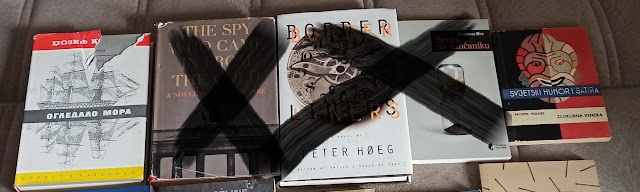
OGLEDALO MORA - Džozef Konrad

OGLEDALO MORA - uspomene i utisci - LIČNA ISTORIJA - sećanja

Tvrdi povez sa zaštitnim omotom, ćirilica, 385 stranica, zacepljen zaštitni omot

400 din + ptt


ZLOKOBNA VENERA – P. Merime

Klasična priča strave, i još neke pride…

300 din + ptt


BEZ UČENICE!

BLEZ SANDRAR VAM GOVORI

500


MISTERIJ LETEĆIH TANJURA, A. Bele

veći format, kolor fotografije

1.000


KATIL, Stevan Sremac / B. Miltojević

Bogato ilustrovano, originalni crteži Ivice Stevanovića, unikatna knjiga (nešto kao stari niški krimi-horor)

Moj hvalospev vidi ovde: http://cultofghoul.blogspot.com/2009/01/katil-prikaz-knjige.html

800


NI SNOVI NI JAVA, Aleksander Blok (književni eseji)

400


FILAŽ, br. 13, god. 2015

400


NOVELE I PRIPOVETKE, Aleksej Tolstoj

600

Izdanje iz 1945, ali odlično očuvano


COLLECTED WORKS OF F. SCOTT FITZGERALD (romani i priče)

1.200

Knjiga na engleskom, veliki format, 1.450 strana

петак, 24. март 2023.

NAJBOLJI HORORI 2022


Nedavno sam na blogu podelio nagrade ZLATNI GHOUL za najveća postignuća u hororu (ne samo na filmu!), a evo, kucnuo je najzad čas i da okačim top-listu svega što sam hororično gledao prošle godine, a našao za shodno da i zabeležim.

Prvih 30-ak se još i mogu pogledati – a ovo naniže, Azatot nek vam je u pomoći.

Lista obuhvata sve horore koje sam gledao od kraja februara 2022. do kraja februara 2023.

Na nultom mestu je film koji zaista mislim da ne mogu da mećem i rangiram zajedno sa ostalima jer jedva da je narativni – više je to experimentalno čudilo i ludilo koje čak i po trajanju od 65’ ne može zaista da se nadmeće s dugometražnima; zato je i istaknut i izdvojen (kao prošle godine MAD GOD).

Iz sličnog razloga, sasvim na dnu, videćete dva naslova za koja je takođe teško reći šta su – experimentalni faund futidž ili igrani film? Serija ili film od pet sata?

Za one koji vole sve lepo servirano i sažvakano, najvažnije – svi filmovi o kojima sam tokom godine pisao na blogu, LINKOVANI su na donjoj listi ka svojim rivjuima: ako kliknete na zaplavljene naslove, možete čitati (t.j. podsetiti se) šta sam o njima ovde imao reći. Ostali me nisu nadahnuli ni za toliko.

Hvala na pažnji i doviđenja.


NAJBOLJI HORORI 2022.

prema Dr Ghoulu


0. 2551.01
****

4+


1. TERRIFIER 2

***(*)

4-


 2. MEGALOMANIAC

***(*)

4-


 3. SALOUM

***(*)

4-


4. DASHCAM 

***

3+


5. HATCHING  

***

3+


6. HELLRAISER 

***

3+


7. DEADSTREAM  

***

3+


8. SPEAK NO EVIL

***

3


9. PREY

***

3


10. FRESH

***

3


11. INCANTATION

***

3-


12. BARBARIAN

***

3-


13. SKINAMARINK

***

3-


14. M3GAN

***

3-


15. VENUS

***

3-


16. BONES AND ALL

**(*)

3-


17. THE MENU  

**(*)

3-


18. X

**(*)

2+


19. HISTORY OF THE OCCULT

**(*)

3-


20. THE GRANDMOTHER

**(*)

3-


21. THE CURSED  

**(*)

3-


22. THE INVITATION

**(*)

3-


23. SICK

**(*)

3-


24. WATCHER

**(*)

2+/3-


25. THE HOUSE

**(*)

3-


26. ORPHAN - FIRST KILL

**(*)

2+/3-


27. THE BLACK PHONE  

**(*)

2+


28. SMILE

**(*)

2+


29. PEARL

**

2


30. CRIMES OF THE FUTURE  

**

2+


31. DARK GLASSES (OCCHIALI NERI)

**

2+


OSTATAK


KOJEŠTA

(GLEDLJIVO, ZA OČAJNIKE)


BODIES BODIES BODIES

**(*)

2+


SOFT & QUIET

**(*)

2+


PIGGY

**(*)

2+


SHEPHERD

**

2+


RESURRECTION

**

2+


THE LAIR

**

2


NOCEBO

**

2


DAWN BREAKS BEHIND THE EYES

**(*)

2+


PROJECT WOLF HUNTING

**(*)

2+


MATRIARCH

**(*)

2+


A WOUNDED FAWN

**

2+


ALL THE MOONS

**

2+


ĐUBRE

(NEGLEDLJIVO)


HALLOWEEN ENDS  

(*)

1-


MRAK

DARKLING

**

2


TEXAS CHAINSAW MASSACRE  

*(*)

2-


YOU WON'T BE ALONE  

*(*)

2-


NOPE  

**

2-


SHE WILL

**

(2-)


MEN  

**

2-


SOMETHING IN THE DIRT

**

2-


GOODNIGHT MOMMY

**

2


CHALK LINE

**

2


HOUSE OF DARKNESS

*(*)

2-


GLORIOUS

**

2-


VHS 99

*

1


MR HARRIGAN’S PHONE

*(*)

2-


MANDRAKE

*(*)

2-


SLAPFACE (2021)

**

2-


THE HOUSE OF SNAILS

**

2-


VAMPIR

*(*)

2-


THE BLACK SPIDER

**

2


OLD PEOPLE  

**

2


REVEALER  

*

1+


THE PRICE WE PAY 2022

**

2


NANNY

**

2-


PREY FOR THE DEVIL

*(*)

2-


EXPLOITED

*(*)

2-


OLD PEOPLE

**

2


NESVRSTANI


RIGET EXODUS

****

4


THE TIMEKEEPERS OF ETERNITY

**(*)

3-


субота, 18. март 2023.

Orfelin izdaje KNJIGE KRVI!


Orfelin izdavaštvo i urednik dr Dejan Ognjanović imaju veliko zadovoljstvo da vas obaveste da je Orfelin obezbedio autorska prava za objavljivanje u Srbiji svih šest Knjiga krvi Klajva Barkera.

            U pitanju je šest međusobno povezanih zbirki vrhunskih, modernih horor priča koje su, kada su se pojavile 1984-85, donele dotad neviđenu revoluciju u savremeni horor. Za razliku od i tada popularnog Stivena Kinga, Barkerov horor u središtu nije imao porodice i ustaljene likove koji teže tzv. normalnosti, čak i kad su od nje daleko (npr. Keri) – već autsajdere, otpadnike, muške i ženske prostitutke, homoseksualce, sitne i krupne kriminalce, zatvorenike, prevarante, lutalice, itsl. Njegov je horor bio dah svežine i subverzije, eksplicitan ali i poetičan, fantastičan i zadivljujuće originalan. Kao takav, prirodno je da će svoj novi dom naći u Orfelinovoj ediciji „Crna mačka“, u dva toma.

            Ove zbirke su već bile objavljivane u Srbiji, ali u sumnjivim uslovima, sa upitnim dizajnom i slabim, mekim povezom; nisu imale nikakvih pratećih materijala (pogovor, biografija, napomene, ilustracije, itsl) koji bi dali dignitet sadržaju, već su ga opremom, štampom, povezom i opštim pristupom tretirali kao petparačku literaturu.

            Izdanje Knjiga krvi u Orfelinovom prepoznatljivom vrhunskom vizuelnom tretmanu i sa stručnim prilozima urednika dr Ognjanovića biće prvo pravo, dostojanstveno predstavljanje ovih Biblija modernog horora pred srpskom čitalačkom publikom i kritikom.

            Evo osnovnih podataka o ovom izdanju.

            Obim: dva velika toma, od po oko 400-500 strana svaki (KNJIGE KRVI 1-3 i KNJIGE KRVI 4-6), formata i dizajna istog, odnosno sličnog kao NEKRONOMIKON i KNJIGA EJBONOVA.

            Prevod: biće korišćeni postojeći srpski prevodi (A.B. Nedeljković, A. Petković, A. Marković, G. Skrobonja), ali će uz detaljno poređenje s originalnim tekstovima biti korigovani, ako se negde ukaže potreba.

            Sadržaj: svih 30 priča od kojih se sastoji ovih šest zbirki. Pored toga, ova izdanja će imati i značajne tekstualne i vizuelne dodatke: obiman Pogovor o značaju Knjiga krvi i Barkerove horor poetike, detaljna Biografija Klajva Barkera, iscrpna Bibliografija i Filmografija, i još ponešto. Više detalja kad se primakne izlazak knjiga.

artwork by Clive Barker

            Dizajn: korice će, kao i sve u ediciji „Crna mačka“, dizajnirati Ivica Stevanović. U unutrašnjosti, svaka od 30 priča imaće novu, originalnu ilustraciju u izvedbi već dokazanih kao i novih Orfelinovih umetnika. Videćemo da li ćemo, i u kom obimu, moći da koristimo i Barkerove ilustracije u pratećim tekstovima.

            Kad izlazi: Oba toma KNJIGA KRVI izaći će iz štampe za Sajam knjiga u oktobru 2023. To znači da će pretplata biti raspisana sredinom septembra.

artwork by Clive Barker

            Cena: Prodajna cena bi, po tomu, trebalo da bude negde u rangu cene NEKRONOMIKONA. To znači da bi ova dva toma koštala kao dva NEKRONOMIKONA. Ako je NEKRO sada kod Orfelina 2.500, to znači da bi dva toma, sa svih 6 KNJIGA KRVI, danas koštala negde oko 5.000 din. Ipak, ništa nije u kamen urezano, a ponajmanje ranoprolećne prognoze o tome kakve će biti cene usred jeseni, pola godine kasnije. Daleko je oktobar, a svetska i domaća ekonomija mogu nam prirediti razna neprijatna iznenađenja – ali nadajmo se da neke veće inflacije ipak neće biti i da će cene papira i štampe ostati na sadašnjem nivou.

            Prodaja: Ova dva toma prodavaće se isključivo zajedno. Verovatno će imati i zajedničku zaštitnu ukrasnu kutiju. Prodaja „na parče“, samo jednog od tomova, neće biti moguća. Zato vam i najavljujemo ovo izdanje na vreme, odnosno pola godine unapred: ako to želite, možete se otarasiti (prodajom) dosadašnjih izdanja, ako ih imate, a svakako počnite da ŠTEDITE, kako biste bili spremni da krajem oktobra u svoje ruke smestite dve krvavocrvene lepotice kakve Srbija još nije videla – a, verujte, ni svet…

artwork by Clive Barker

            Kuriozitet: Ovo će biti prvi put da se u Srbiji svih 6 KNJIGA KRVI objavljuje odjednom, i pod identičnim uredničkim i dizajnerskim pečatom.

Kada su prvi put izašle u Srbiji, to je bilo ovako: prve tri, u leto 1991. u tri zasebne knjižice mekog poveza, u tiražu od 3.000, sa drečavo-plavim koricama i lošim ilustracijama na njima, a preostale tri 1994. usred rata i inflacije i pakla, u tiražu od po 300 primeraka, sa finim ilustracijama Boba Živkovića, ali u mekom i vrlo lako raspadljivom, razlepljivom povezu za jednokratnu upotrebu.  

Zatim je jedan izdavač, 2012. godine, objavio samo druge tri KK (4-6), u tvrdom povezu, sa nepojmljivo lošim dizajnom korice.

Na kraju je Pirat i Lopov, Boban Knežević, bez ikakvih prava i skrupula, u svojoj garaži printao („on demand“) svih šest, u mekom povezu, na lelujavom papiru – ne plaćajući ni prevodioce, ni autorska prava za ovo svoje pilićarenje, što je i inače njegov prepoznatljivi zaštitni znak. 

Orfelin, dakle, po prvi put objavljuje svih šest knjiga odjednom, sa identičnim dizajnom, i sa ujednačenim prevodima, i sa pratećim tekstovima i ilustracijama. Orfelinov opšti pristup spaja Ljubav prema lepoj i kvalitetnoj knjizi sa Znanjem da se ona najadekvatnije predstavi novim i starim čitaocima. 

            Ovo su svi detalji koje vam u ovoj ranoj fazi mogu kazati.

artwork by Clive Barker

            Pratite ovaj blog za konkretnije obznane u narednim mesecima, kada budemo imali šta novo dodati.

            Hvala svim čitaocima i kupcima Orfelinovih knjiga na interesovanju, pritiscima, ucenama, pretnjama i navaljivanjima u blog-komentarima, kao i naživo, na Sajmu knjiga, kojima ste nas uvalili u ovaj posao. Sada budite spremni da svojim novčanicima podržite ovaj veoma rizičan i skupocen posao.     

artwork by Clive Barker


Kao što već rekoh svojevremeno, u jednom blog komentaru ovde: znam ja da postoje desetine horor fanatika spremne da daju novce za KNJIGE KRVI u Ghoul-Orfelin aranžmanu: to nije sporno. Ali, ima li ih na stotine? Ima li ih hiljadu? Jer jedino tako će ovaj ambiciozan poduhvat biti isplativ, i jedino tako će i edicija „Crna mačka“ moći da raste.

Da vidimo. Kažu da sreća prati hrabre…

Drugi štancuju potrošnu robu; mi pravimo knjige za večnost. Podržite ono u šta verujete.


* * *


Mislim da je ova vest suviše velika i važna da bih je sada i ovde zagušivao drugim dodacima, na temu drugih knjiga.

Najavu mojih drugih horor planova (u Orfelinu i u Ghoul Pressu) obznaniću uskoro. 

Do tada, podsećam vas da je u toku PRETPLATA na dve nove knjige iz edicije „Poetika strave“, koja traje još nedelju dana. Detalje o tim knjigama imate OVDE.